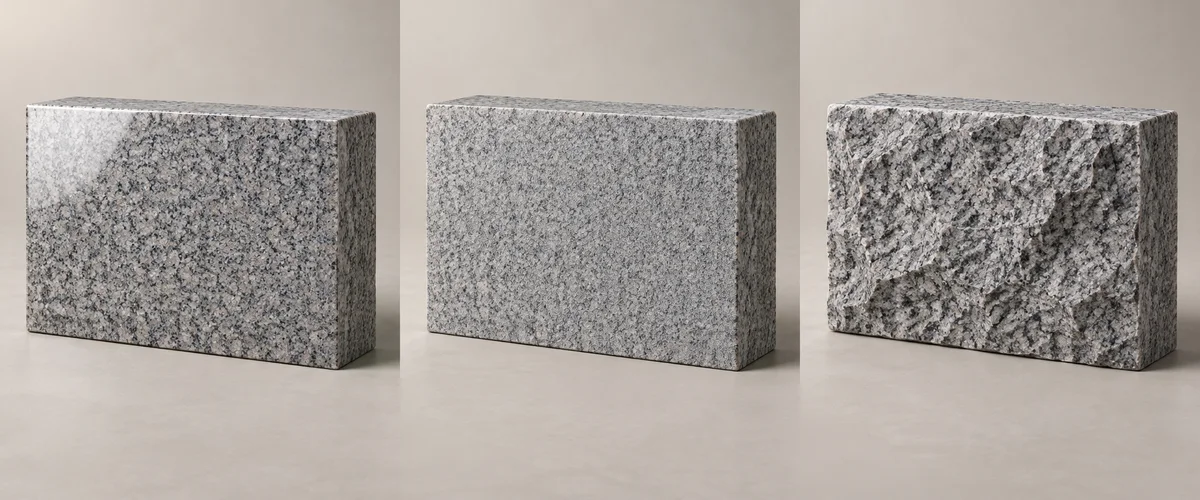
Polished
Smooth and reflective; brings out color and grain.
STYLES · STONE · SIZING
Compare common styles. Learn the parts, finishes and measurements.
Browse styles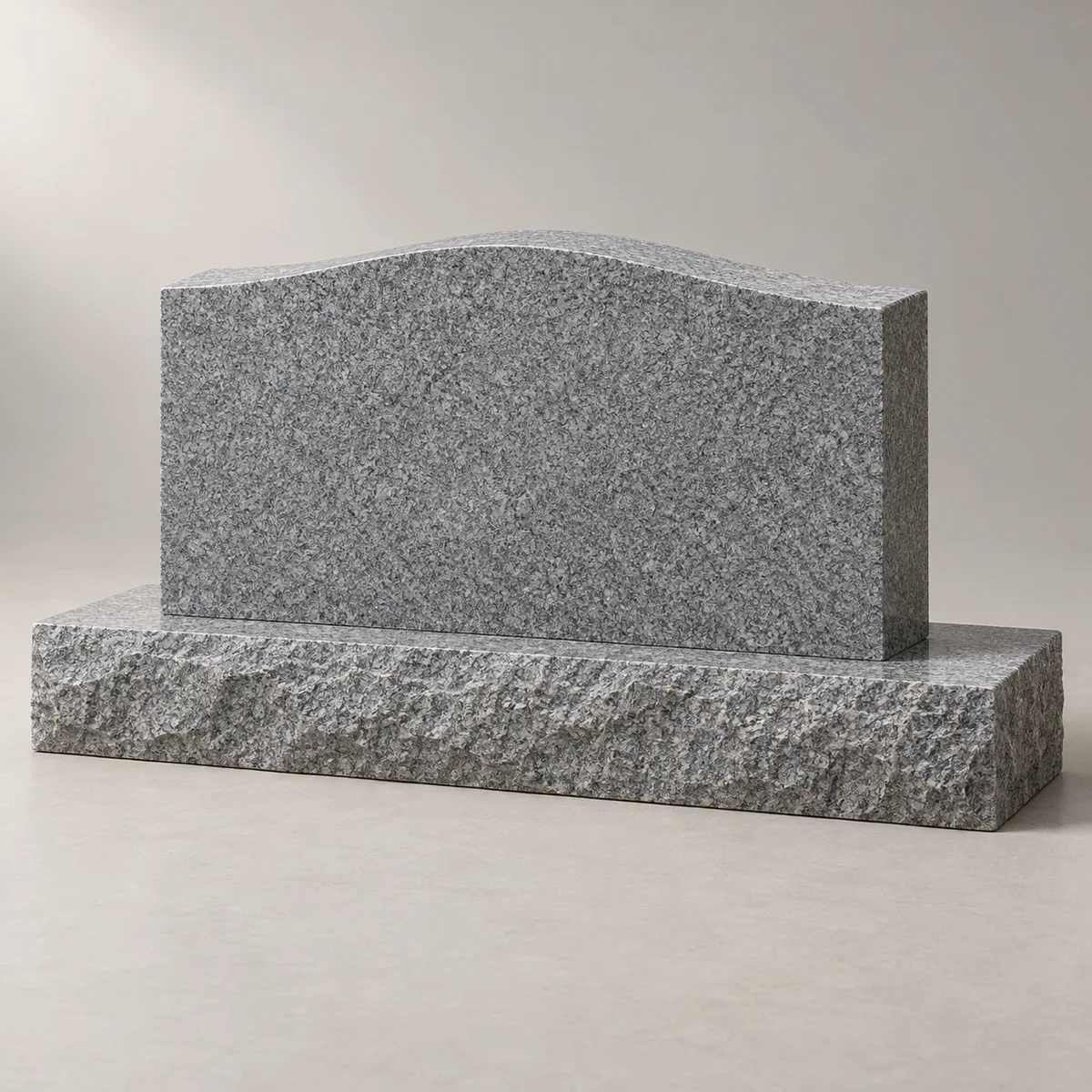
01
Your cemetery determines which styles and sizes are permitted.
Standing tablet and base.
DetailsThe upright stone is called the die or tablet. A single or companion memorial may have room for one or several inscriptions.
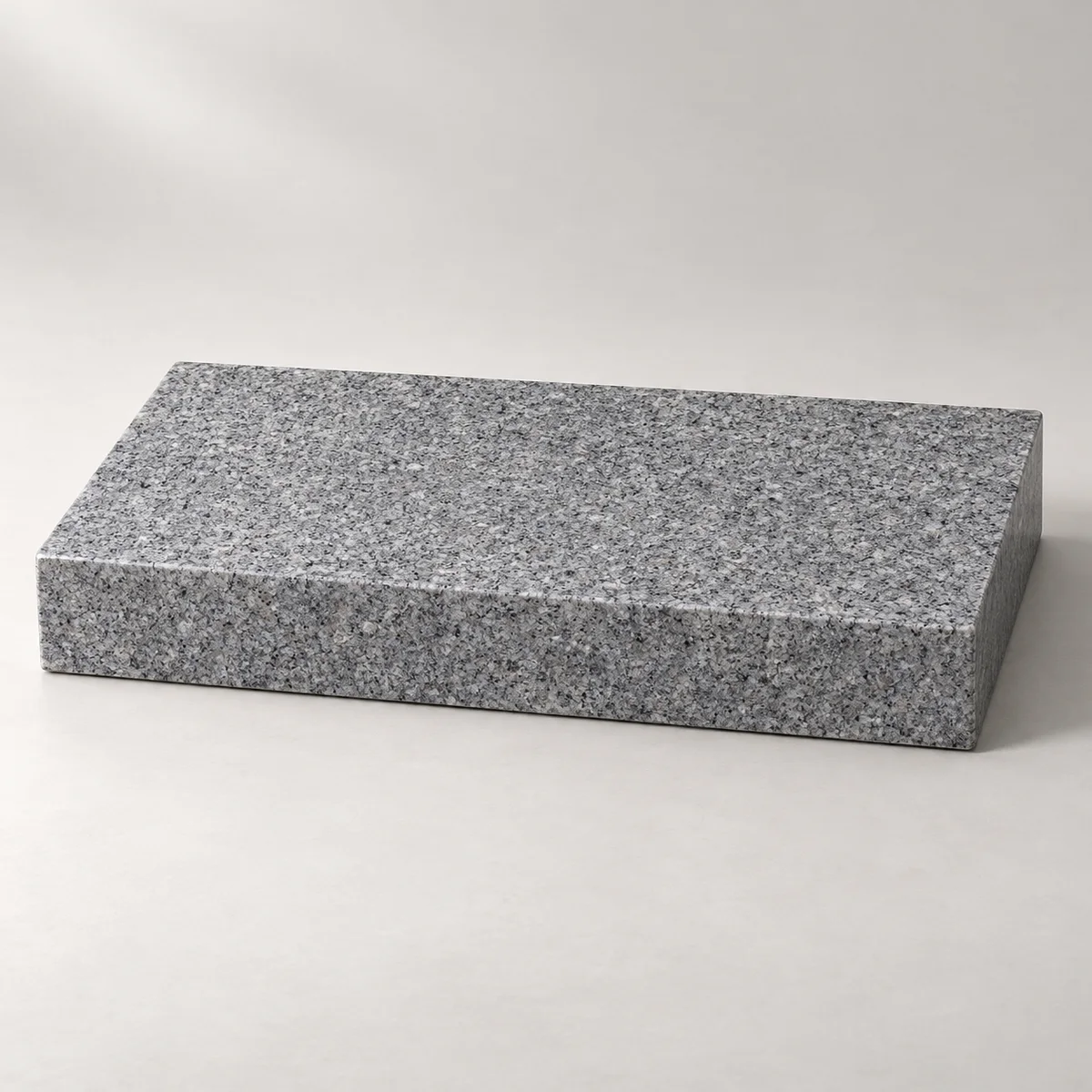
Usually level with the ground.
DetailsAlso called a flush or grass marker. Its face is usually set level with the ground, following cemetery requirements.
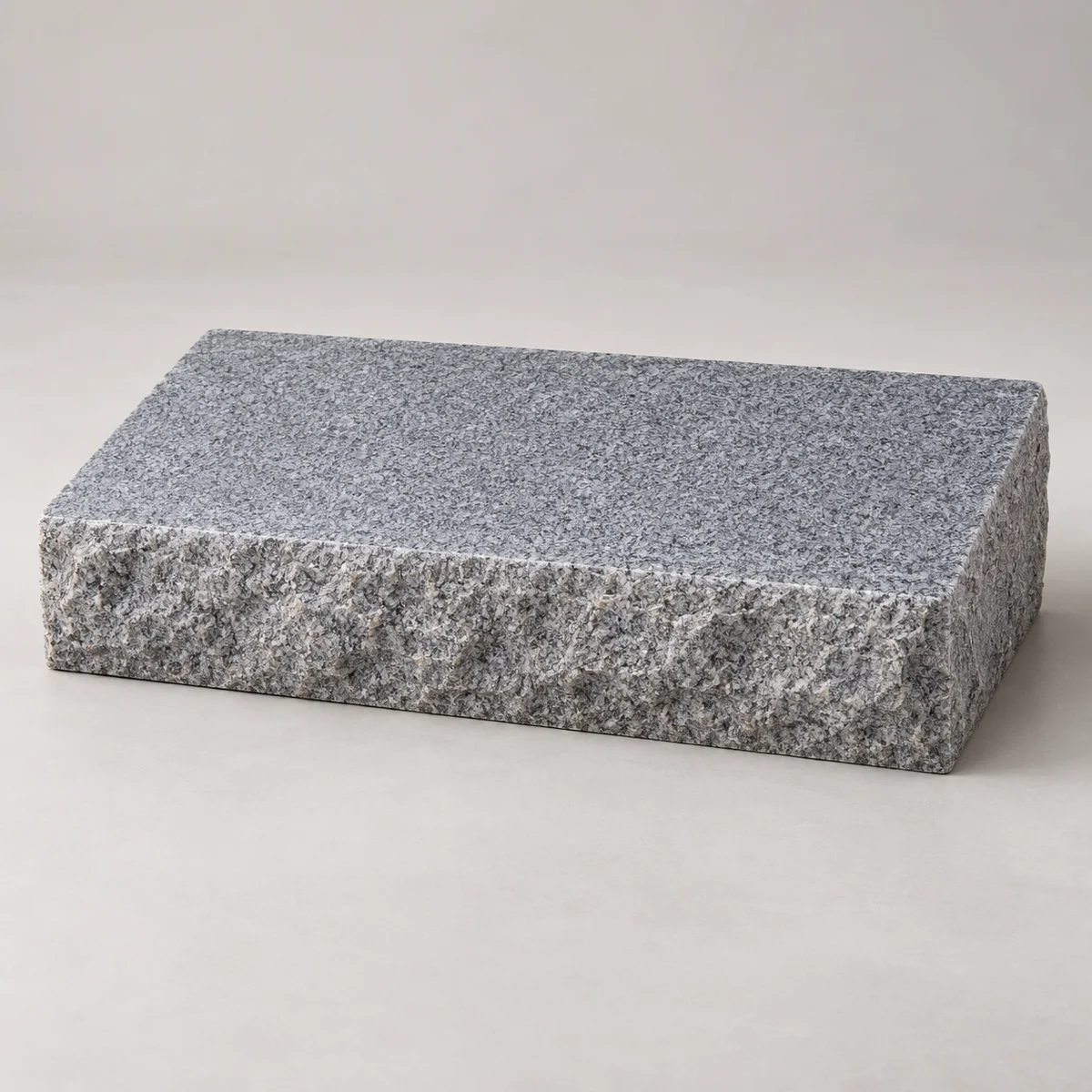
Low, with a slight slope.
DetailsAlso called a pillow marker. It sits above ground, with a gentle slope across the lettering surface.
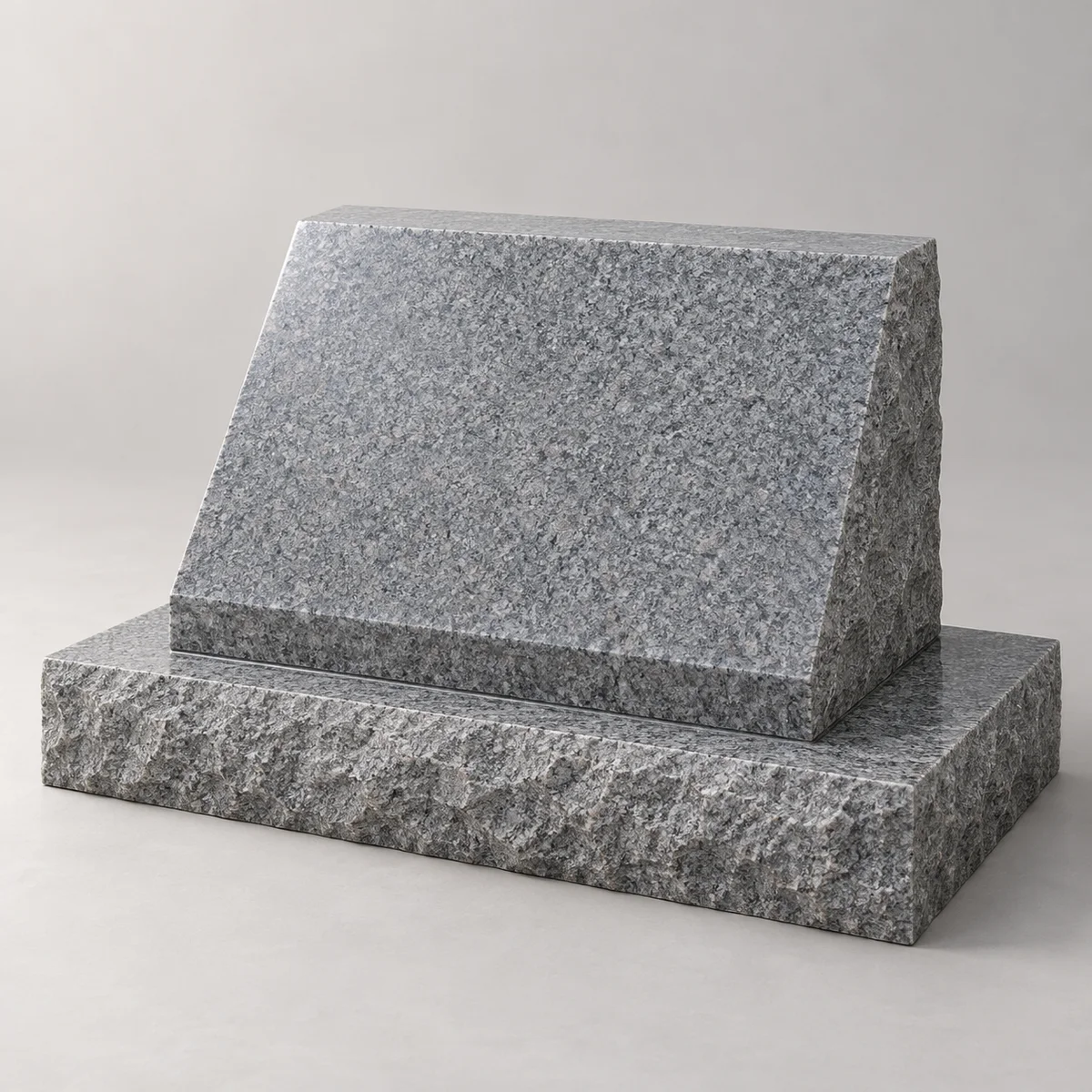
Taller, with a steep face.
DetailsA slant has a steeper face than a bevel. It may stand on a base; the arrangement depends on the design and cemetery.
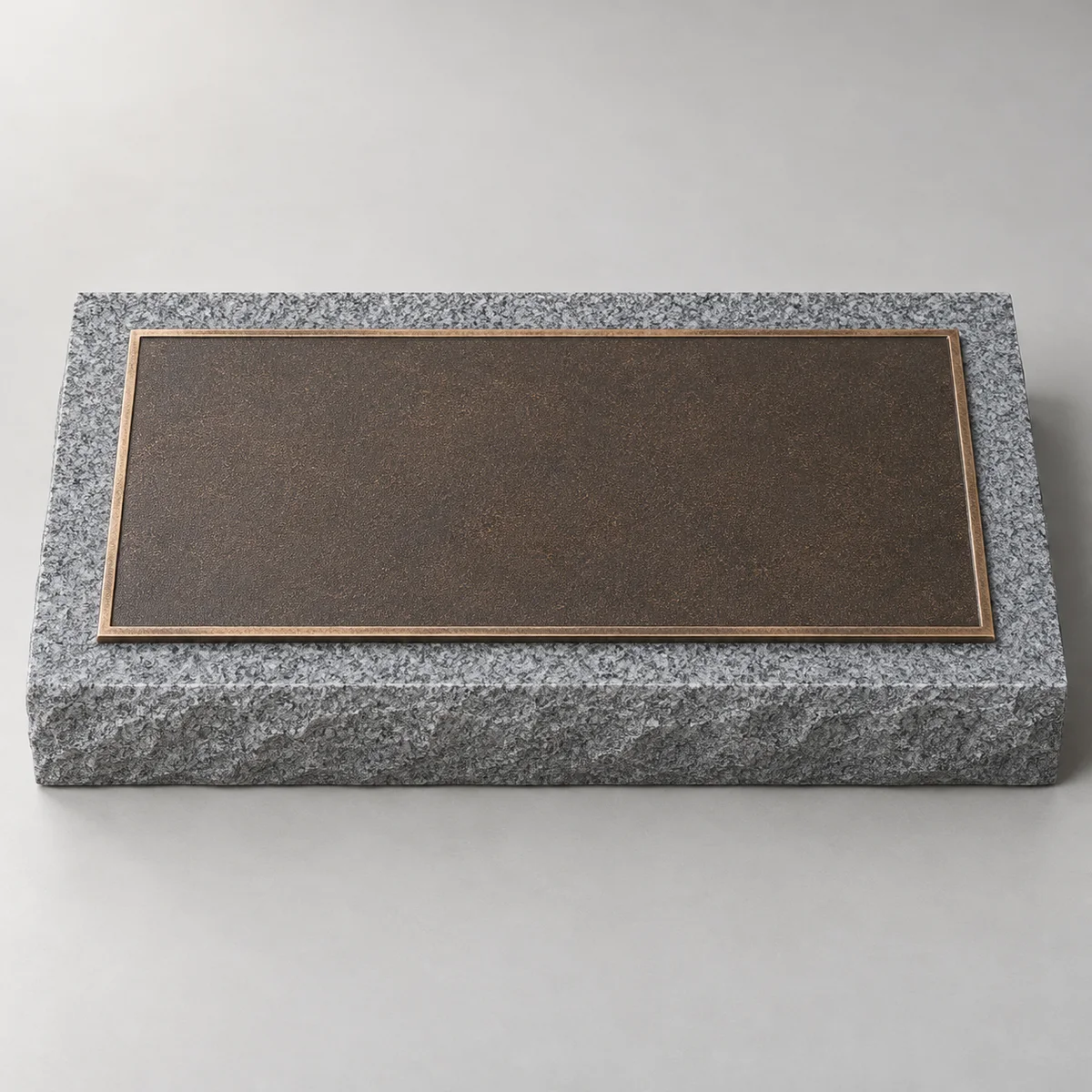
Metal plaque on a backing.
DetailsBronze describes the material, not a single shape. A bronze grave marker often has raised lettering on a granite backing. Confirm which forms the cemetery permits.
AI-generated illustrations show form, not inventory, exact color or cemetery approval. More shop photos ↗
Single and companion describe how many people a memorial remembers. They do not prescribe one shape or size.
02
Tap a number to read the definition.
The upper, upright piece of stone. Its front face holds the main inscription.
The face is the surface for lettering. The inscription includes names, dates and any personal message. An epitaph is a short remembrance or tribute.
The wider stone beneath the die. It is part of the visible memorial, separate from the foundation below.
The support beneath the memorial. Its design and depth depend on the site, cemetery requirements and installation plan.
A vase is a separate flower holder; space for it is considered when planning the base. Headstone, monument and memorial are commonly used terms. You do not need specialist vocabulary to ask us a question.
03
Illustrative colors. Confirm the stone and finish with a physical sample.
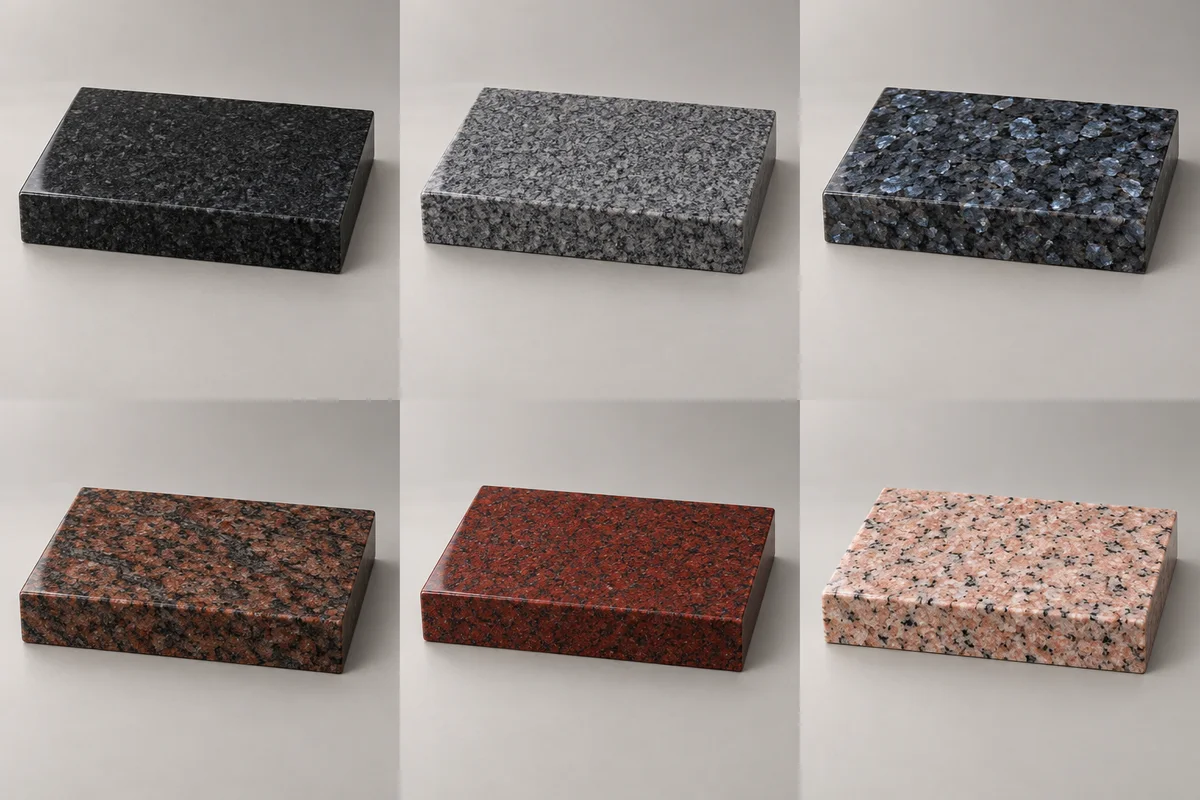
AI-generated color and finish illustrations. Natural grain and color vary; lighting and screens affect appearance. These are not exact quarry samples.
Smooth and reflective; brings out color and grain.
Matte, often used behind lettering for contrast.
A rough, broken-looking edge.
For an upright die: polished front and back (P2); front, back and top (P3); or all five exposed faces (P5). Other surfaces may have a different finish. We identify each surface on your drawing.
04
Typeface is the letter shape. Treatment is how the stone is cut and finished.
AI-generated letter shapes, not exact font specimens. Confirm actual typefaces and available styles with the shop.
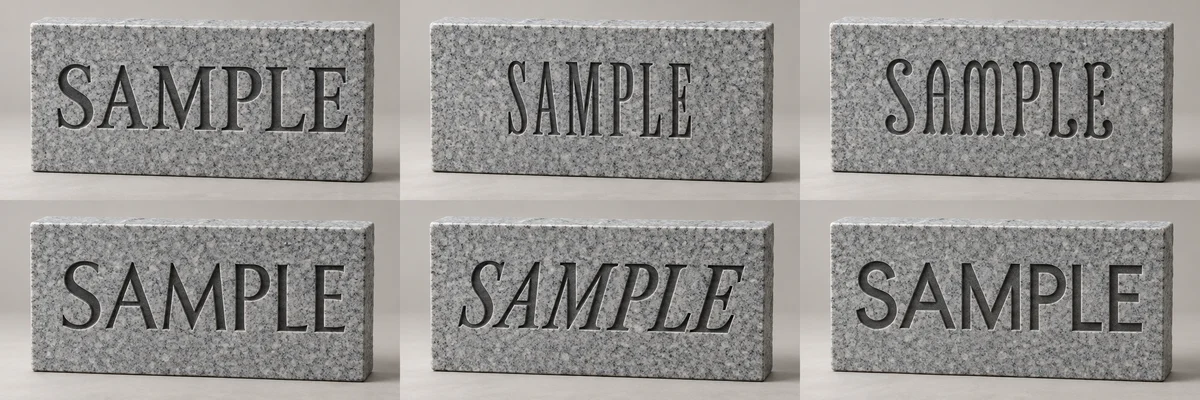
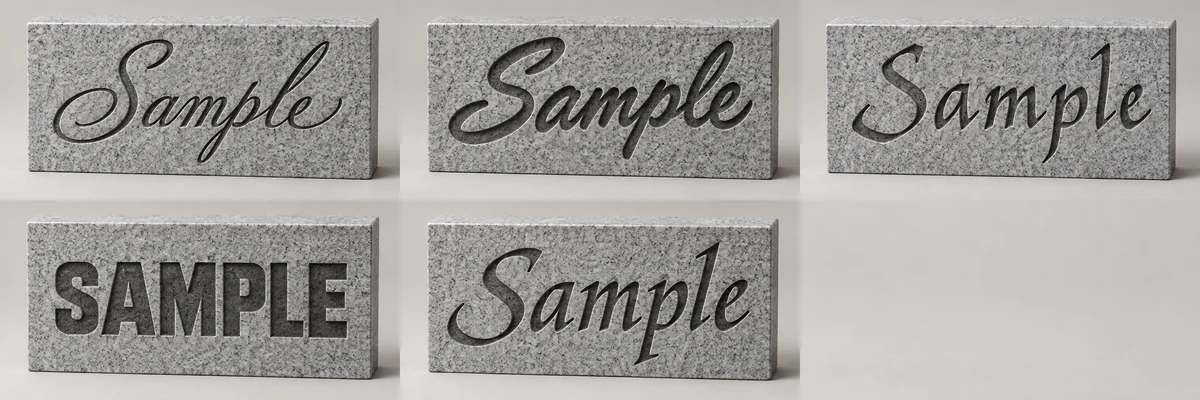
The same letter shape can have a different treatment. Tap an example for details.
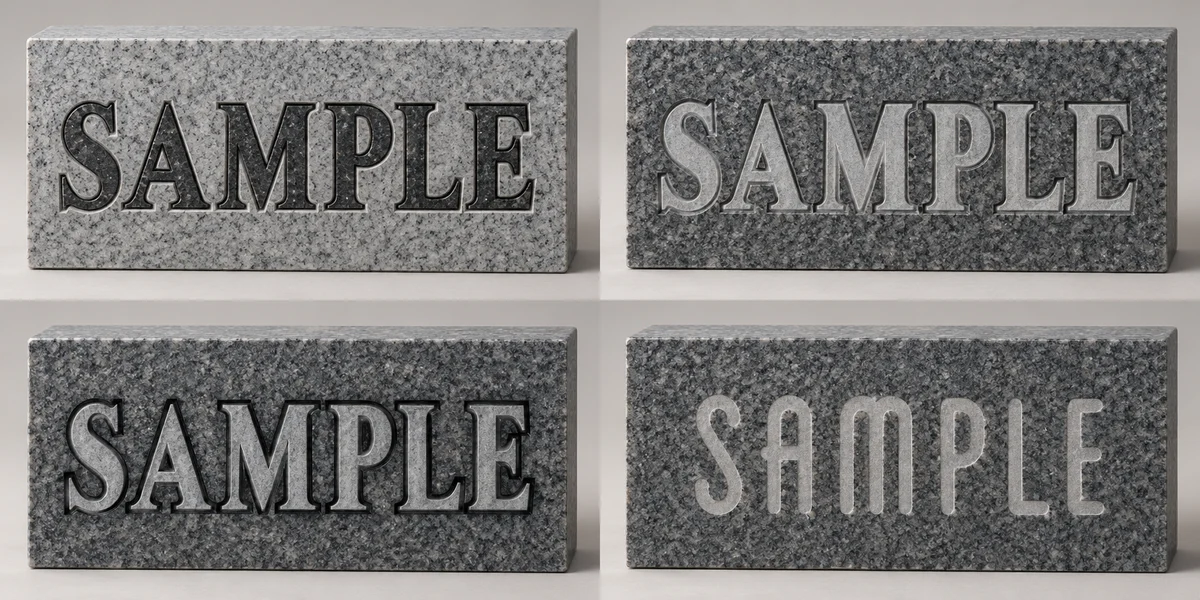
Polished letters on a frosted field.
DetailsLetter faces keep their polish. A recessed V-cut outlines each letter; the surrounding field is frosted.
Frosted letters on a polished field.
DetailsThe letter face is matte. A recessed V-cut outlines it against the polished stone.
Frosted letters with a dark outline.
DetailsIn this example, a tinted recessed outline adds contrast around frosted letters. Confirm the shop's shadow treatment with a sample.
Shallow lettering; Vermarco-like shapes.
DetailsOnly the surface polish is removed. Vermarco names the letter style here, not the cutting method. Contrast depends on the stone.
V-cut means a recessed groove with a V-shaped profile. Treatment names and contrast vary with the stone and process; confirm a shop sample.
05
Die: length × thickness × height. Base: length × depth × height.
EXAMPLE DIMENSIONS
36 × 8 × 24
36 inches across the face, 8 inches front to back, 24 inches high for the die alone.
1 foot = 12 inches. Die height excludes the base. Confirm the overall installed height with the cemetery.
For an upright, roughly 6–9 inches beyond the die at each end. About 9 inches per end is common with two vases, depending on their size.
36-inch die + 9 + 9 = 54-inch base
3-foot die → 4-foot 6-inch base
Typically 3 inches extra front and back of the stone’s bottom joint, where it meets the base.
10-inch slant joint + 3 + 3 = 16-inch base depth
An upright base height usually matches die thickness. Slants generally start with a 6-inch-high base.
8-inch-thick die → 8-inch-high base
Flexible shop examples. These are not cemetery rules or structural specifications. Vases, stone size, design, site conditions and the installation plan may change them. Final dimensions are confirmed before approval.
Send a photo and the cemetery name. If you have dimensions, tell us which piece they describe and the units. We can confirm measurements on site; you do not need to move, lift or lean on a memorial.
06
Share the cemetery name before finalizing a design.
Permitted style, material, dimensions and vases for your lot or section.
Plot, orientation, placement and required cemetery permissions.
The cemetery and installer confirm suitable support and setting requirements.
Professional installers handle lifting and placement. Confirm who does the work and the schedule.
No. The base is the visible stone under an upright or slant. The foundation supports the memorial beneath it. A larger base does not replace suitable support, cemetery approval or a professional installation plan.
Send a photo or bring the cemetery name. We can help with the details.