Metal lettering in Day's examples
Lewis Foreman Day’s Chapter IV offers two brief metal examples beside its longer discussion of monumental inscription design. The captions name the materials and contexts; the images let us compare the arrangement and visual weight of the lettering. They do not document manufacturing steps, metal alloys, attachment, weathering, or present-day conservation.
Compare the two examples
Section titled “Compare the two examples”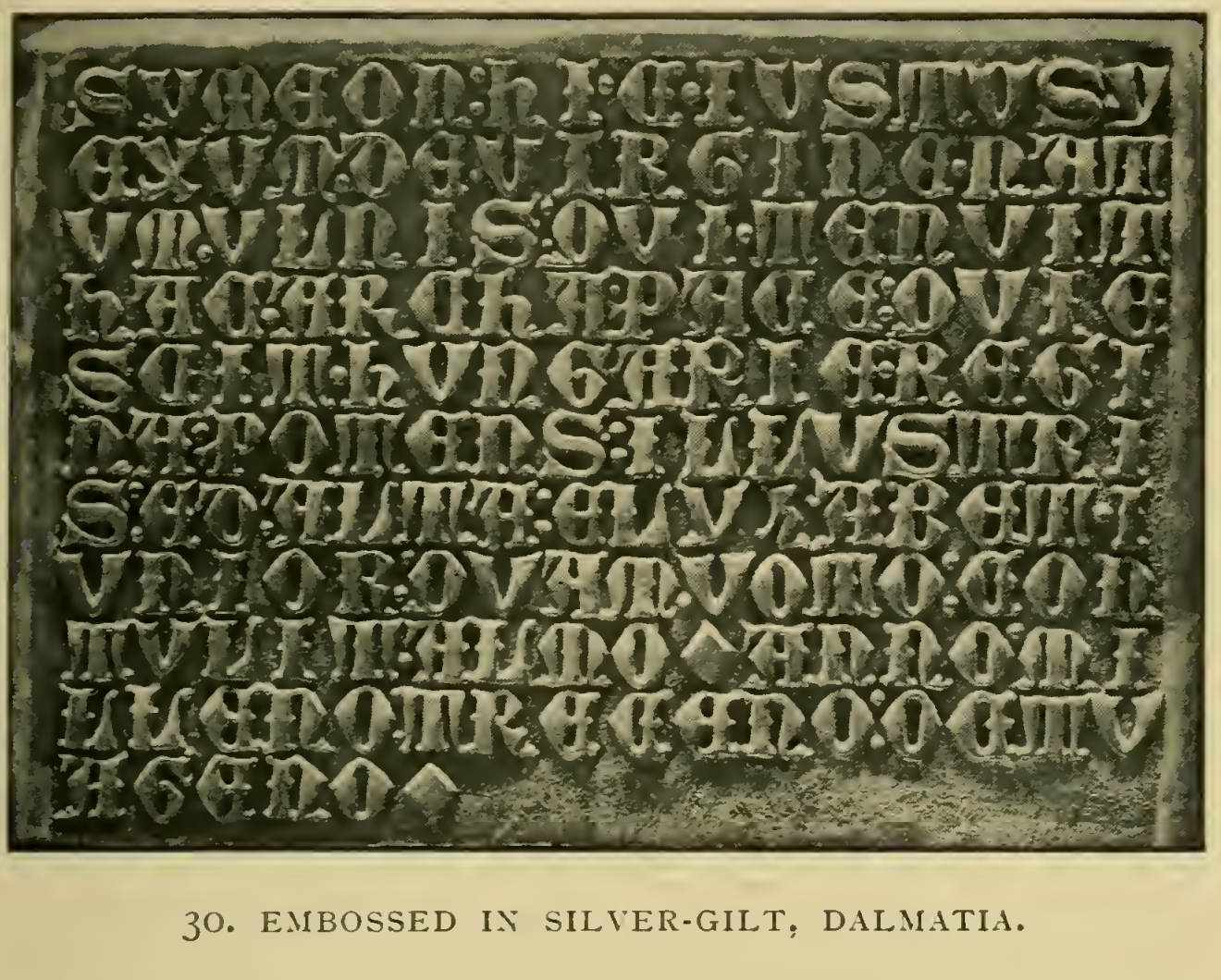
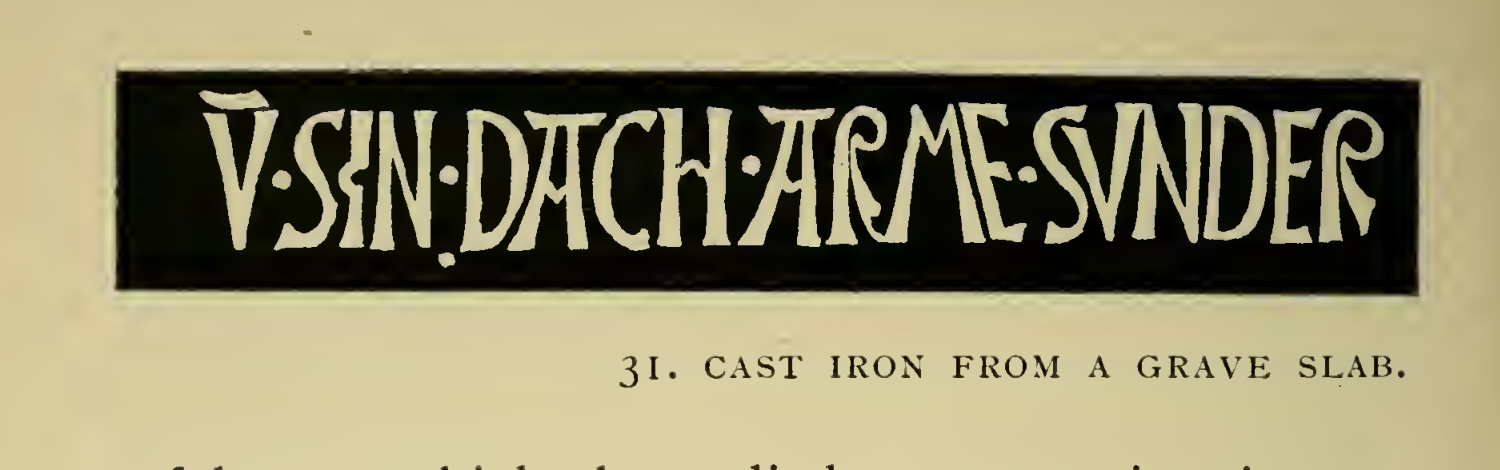
The contrast is useful as a reading exercise: note how each example organizes its text before guessing what the material required. Fig. 30 presents a dense multi-line field; Fig. 31 presents one short line in a narrow panel. A modern sketch can begin by recording the intended text, its line count, and the shape of the available field, then ask which historical example offers a useful visual comparison. That is an editorial design exercise, not a reconstruction of either object’s manufacture.
For Day’s fuller discussion of line planning and framing, see Plan the inscription before its frame. His marble example is discussed in Lettering in marble; the contrast in these plates is about the depicted inscriptions, not a claim that metal and stone use interchangeable methods.
Source and editorial credit
Section titled “Source and editorial credit”Lewis Foreman Day, Lettering in Ornament: An Enquiry into the Decorative Use of Lettering, Past, Present, and Possible, London: B. T. Batsford; New York: Charles Scribner’s Sons. The title leaf is undated; the Smithsonian Libraries and Internet Archive records identify this edition as 1902. Chapter IV, “Monumental Inscriptions,” prints Fig. 30 on p. 47 and Fig. 31 on p. 48 (Archive PDF pp. 83-84 in the exact 266-page download). The book’s captions identify the depicted subjects and materials, but no individual maker of either printed reproduction. See the Day source record.
The PNGs are unadjusted crops from 400 ppi renders of the source pages; separate JPEGs are display derivatives. The source PDF remains in private review storage and is not bundled with the wiki. The Smithsonian item-level rights record identifies “No Copyright - United States”; this is U.S.-only evidence, not a worldwide rights determination.